Why Every Event Planner Needs a Creative Retreat (and How to Make It Happen)
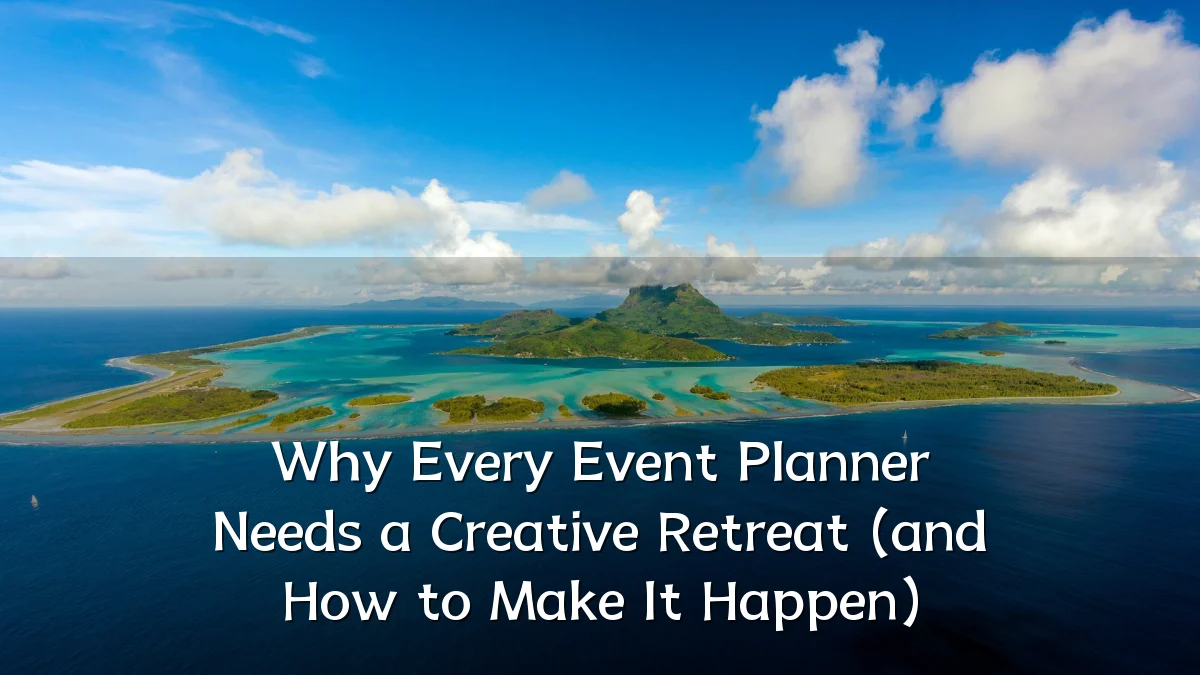
Event planning has long demanded a blend of logistical precision and creative vision. In recent years, however, the pressure to deliver unique, memorable experiences has intensified as client expectations rise and digital fatigue blunts the impact of standard activations. Against this backdrop, the concept of the creative retreat—a dedicated, structured break from daily operations—has gained traction among planners who argue that inspiration cannot be scheduled between vendor calls.
Creative Burnout in a High-Stakes Industry
The event sector operates on tight cycles of ideation, execution, and evaluation, leaving little room for reflection. Industry surveys consistently point to rising rates of burnout among planners, with many citing the constant demand for fresh concepts as a primary stressor. Clients increasingly expect events that feel bespoke and emotionally resonant, yet the working conditions that produce those results are often squeezed by compressed timelines and budget constraints.
Several factors contribute to the current environment:
- The shift from purely transactional gatherings to "experiential" events has raised the creative bar for every planner, regardless of niche.
- Social media comparison loops create pressure to replicate or exceed trending formats without genuine adaptation.
- Remote and hybrid workflows have blurred boundaries between work and rest, reducing the mental space needed for original thinking.
Planners who operate year after year without a deliberate reset often report diminishing returns on their creative output—a pattern that retreat advocates say a structured break can interrupt.
What Planners Say About the Pressure to Innovate
Conversations with event professionals reveal a common tension: they are expected to generate novel ideas on demand, yet the environments in which they work reward execution over exploration. Many describe a cycle of recycling concepts from past events because there is no sanctioned time to develop new ones.

Common concerns raised by planners include:
- Fear of stagnation: Repeating formats feels safe but erodes differentiation over time.
- Lack of cross-pollination: Daily work rarely exposes planners to industries, art forms, or disciplines outside their immediate field.
- Perceived cost of downtime: Taking time away from clients and revenue is difficult to justify, even when long-term returns are likely.
These concerns are not unfounded. For independent planners and small agencies, every hour away from billable work carries opportunity cost. Yet those who have participated in retreats often describe the experience as a net gain in both energy and concrete output.
How a Creative Retreat Resets Perspective and Output
The structure of a creative retreat varies widely, but its core function remains consistent: to step away from operational demands and engage in deliberate, unstructured exploration. The impact, according to planners who have tried this approach, tends to manifest in several observable ways.
- Renewed conceptual range: Exposure to unfamiliar settings, speakers, or collaborative exercises can trigger connections that a typical work environment does not permit.
- Reduced decision fatigue: A short break from vendor negotiations, budget trade-offs, and timeline management allows the brain to recover its capacity for judgment.
- Stronger professional networks: Retreats often bring together planners from different markets and specializations, enabling cross-pollination of tactics and insights.
Planners who return from such retreats frequently report that they are able to approach existing projects with fresh eyes, spotting redundancies or opportunities they had previously missed. The impact is rarely a single eureka moment; more often, it is a gradual improvement in judgment and openness to iteration.
Practical Steps to Design a Retreat That Works
Organizing a retreat does not require a large budget or a distant location. The key conditions are intentional structure, clear boundaries from regular work, and a format that encourages both focused activity and open-ended reflection.
Consider the following guidelines:
- Set a limited duration: Retreats that last two to four days tend to offer enough distance from routine without causing logistical strain. Shorter formats often fail to break habitual thinking; longer ones may feel impractical for small teams.
- Choose a setting that contrasts with your usual environment: This may mean a rural location, a city neighborhood you rarely visit, or even a co-working space in a different district. The goal is physical and mental distance, not luxury.
- Balance scheduled and unscheduled time: Over-planning defeats the purpose. Leave gaps for walks, reading, informal conversation, and unstructured brainstorming.
- Include a non-industry stimulus: Guest speakers from fields such as design, psychology, or gastronomy can introduce analogies and methods that planners can adapt to their own work.
- Define a lightweight output: A retreat does not need to produce a full event plan. A single actionable insight, a new partnership, or a refined approach to a recurring problem is a worthwhile result.
For planners who cannot leave their location, a "local retreat" model is growing in popularity. This involves booking a meeting room in a different part of town, setting firm ground rules about phone and email, and treating the time as non-negotiable.
What to Watch Next in the Retreat Space
The idea of the creative retreat is not new, but several developments suggest it may become more structured and accessible in the coming months.
- Specialized retreat operators: A small but growing number of event professionals and hospitality providers are offering retreats targeted specifically at event planners. These blend creative exercises with practical sessions on trends, pricing, and client management.
- Employer-sponsored retreats: Some larger agencies and in-house event teams are beginning to budget for annual creative retreats as a retention and quality tool. This may shift the perception of retreats from indulgence to investment.
- Virtual and hybrid formats: While in-person retreats offer distinct advantages, hybrid models that combine one or two days of shared location with remote pre-work or follow-up may appeal to budget-conscious or time-constrained planners.
The risk to watch is that retreats become commodified or performative—reducing to photo opportunities rather than genuine creative resets. Planners who approach retreats with clear intent and realistic expectations are most likely to see the gains that advocates describe.
As the event industry continues to demand high levels of originality under constant pressure, the question may shift from whether planners can afford a retreat to whether they can afford to keep working without one.